Thursday, June 14, 2007

Goodbye, Toucan Sam

Goodbye, Toucan Sam, Tony the Tiger and Captain Crunch. Goodbye to all the cartoon characters that cereal companies have used over the decades to sell cereal to children. “The policy changes come 16 months after Kellogg and Viacom, the parent company of Nickelodeon, were threatened with a lawsuit over their advertising to children by two advocacy groups, the Center for Science in the Public Interest and the Campaign for a Commercial-Free Childhood, and two Massachusetts parents,” stated the International Herald Tribune. Now that Kellogg has knuckled under, the groups have dropped their lawsuit threats.

Under the coerced non-agreement, Kellogg may still use cartoon characters if the cereals can be reformulated to meet certain nutritional standards, such as zero trans-fats, less than 200 calories per serving, less than 12 grams of sugar per serving, etc. In other words, the cereal has to be bland.

I grew up eating Sugar Frosted Flakes, which were promoted by Tony the Tiger, Frosted Fruit Loops, promoted by Toucan Sam, and Captain Crunch cereal. As far as I am aware, I suffered no ill effects, mental or physical, whatsoever from eating these cereals. Perhaps part of it had to do with my mother, who encouraged me to play outdoors, and who kept firm limits on snacking between meals. I benefited from a responsible mother (thank you, Mom). But the idea of responsibility, parental and individual, is gone. Instead, we are all treated as a collective of children, nursed over by the Nanny State, who applies one-size-fits-all bans on all of us, in order to protect the few who cannot take care of themselves.

I am sick of it. Thankfully, I had Tony the Tiger in my life and tasty, sweet Kellogg’s Frosted Flakes. What about today’s children? What about all of us? The world is made blander by Kellogg being forced to knuckle under to the Mafia-like tactics of busybodies who use the courts to cudgel us all into living in their soul-less, tasteless world.

I say to the Center for Science in the Public Interest, the Campaign for a Commercial-Free Childhood, and the busybody parents who joined the lawsuits: take this spoonful of fruit loops and shove it. Hands off my cereal. Hands off my life.

Thursday, May 31, 2007

The Right to Assisted Suicide

By Thomas A. Bowden. ARI Media. Reprinted by permission.

Here's a quiz: During the eight years Dr. Jack Kevorkian languished in a Michigan prison, how many state legislatures reformed their laws against physician-assisted suicide? Answer: none. Oregon remains the only state to have provided clear procedures by which doctors can end their dying patients' pain and suffering while protecting themselves from criminal prosecution.

For ten years now, Oregon doctors have been permitted to prescribe a lethal dose of drugs to a mentally competent, terminally ill patient who makes written and oral requests, consults two physicians, and endures a mandatory waiting period. The patient's free choice is paramount throughout this process. Neither relatives nor doctors can apply on the patient's behalf, and the patient himself administers the lethal dose.

Elsewhere in America, however, the political influence of religious conservatism has thwarted passage of similar legislation, leaving terminal patients to select from a macabre menu of frightening, painful, and often violent end-of-life techniques universally regarded as too inhumane for use on sick dogs or mass murderers.

Consider Percy Bridgman, the Nobel Prize-winning physicist who, at 79, was entering the final stages of terminal cancer. Wracked with pain and bereft of hope, he got a gun and somehow found courage to pull the trigger, knowing he was condemning others to the agony of discovering his bloody remains. His final note said simply: "It is not decent for society to make a man do this to himself. Probably this is the last day I will be able to do it myself."

What lawmakers must grasp is that there is no rational, secular basis upon which the government can properly prevent any individual from choosing to end his own life. When religious conservatives use secular laws to enforce their idea of God's will, they threaten the central principle on which America was founded.

The Declaration of Independence proclaimed, for the first time in the history of nations, that each person exists as an end in himself. This basic truth--which finds political expression in the right to life, liberty, and the pursuit of happiness--means, in practical terms, that you need no one's permission to live, and that no one may forcibly obstruct your efforts to achieve your own personal happiness.

But what if happiness becomes impossible to attain? What if a dread disease, or some other calamity, drains all joy from life, leaving only misery and suffering? The right to life includes and implies the right to commit suicide. To hold otherwise--to declare that society must give you permission to kill yourself--is to contradict the right to life at its root. If you have a duty to go on living, despite your better judgment, then your life does not belong to you, and you exist by permission, not by right.

For these reasons, each individual has the right to decide the hour of his death and to implement that solemn decision as best he can. The choice is his because the life is his. And if a doctor is willing (not forced) to assist in the suicide, based on an objective assessment of his patient's mental and physical state, the law should not stand in his way.

Religious conservatives' opposition to the Oregon approach stems from the belief that human life is a gift from the Lord, who puts us here on earth to carry out His will. Thus, the very idea of suicide is anathema, because one who "plays God" by causing his own death, or assisting in the death of another, insults his Maker and invites eternal damnation, not to mention divine retribution against the decadent society that permits such sinful behavior.

If a religious conservative contracts a terminal disease, he has a legal right to regard his own God's will as paramount, and to instruct his doctor to stand by and let him suffer, just as long as his body and mind can endure the agony, until the last bitter paroxysm carries him to the grave. But conservatives have no right to force such mindless, medieval misery upon doctors and patients who refuse to regard their precious lives as playthings of a cruel God.

Secular and rational state legislators should regard the occasion of Dr. Kevorkian's release from jail as a stinging reminder that 49 of the 50 states have failed to take meaningful steps toward recognizing and protecting an individual's unconditional right to commit suicide.

***

Thomas A. Bowden practices law in Baltimore, Maryland, and is a senior writer for the Ayn Rand Institute (http://www.aynrand.org/) in Irvine, Calif. The Institute promotes the philosophy of Ayn Rand, author of Atlas Shrugged and The Fountainhead.

**********

Galileo Blogs comments:

This is such a superb editorial, that I am re-posting it here. It captures why the Christian claim to love man is so reprehensible and so false. Anyone who has confronted a loved one dying in pain, or even a suffering pet, for Man's sake, knows first-hand the absolute right of someone to end his own life. That right is an absolute corollary of man's right to his own life.

I can euthanize my suffering pet humanely and with dignity, yet a human being cannot do the same with his own life, and his loved ones must watch him needlessly suffer. Although this is not a proper reason alone to be an atheist, at an emotional level I cannot think of a better argument for atheism than the Christian opposition to suicide.

Thursday, May 24, 2007

In Defense of Price Gouging

Yesterday the House of Representatives passed a bill outlawing gasoline “price gouging.” Violators would face penalties of fines as high as $150 million or prison terms of up to two years. Price gouging is defined as “taking unfair advantage” or charging “unconscionably excessive” prices for fuels. What is unfair advantage? How does one measure when a price is unconscionably excessive? There is no answer.

This is bad law. First, because it is non-objective. Because no objective definition of price gouging is provided in the law, a gas station owner or oil company can never know when it is breaking the law. There is no way to comply with a law when the crime cannot even be defined. More ominously, a non-objective law becomes a tool to terrorize in the hands of unscrupulous government officials. The businessman is told that he must obey the bureaucrat or face punishment, a punishment he cannot defend against because there are no objective standards. This is a tool of tyranny. Incidentally, this is also the nature of antitrust. Like this anti-gouging measure, antitrust law is completely non-objective.

The other reason why this law should not be passed is because it is anti-capitalist. It attacks the heart of the market economy, which is the price mechanism. Prices work to harmonize the interests of buyers and sellers when they are allowed to freely rise and fall. This type of law, to the extent it is enforced, will function as a price maximum. Price maximums, enforced by the state, have one predictable consequence, shortages. This is true in all eras and for all commodities. The pricing principle is an iron law of economics, as solidly and universally valid as the law of gravity. Violate it by imposing price controls and artificial shortages will develop. The principle that price controls cause shortages is an iron corollary of the iron law of prices.

Price controls cause shortages because of two reasons. First, suppliers provide less gasoline (or any other controlled commodity) because they cannot make money selling at the lower price. They cut production until they no longer lose money. Second, at the lower price, customers want more of the product. Combine these two effects – reduced supply and enhanced demand – and you have a shortage. Supply and demand are no longer in equilibrium.

America has already walked down the path of price controls, for energy and many other products and services. In energy, the long lines at gasoline stations in the 1970s were solely due to the price controls imposed on the oil industry. Only when price controls were lifted in the late 1970s/early 1980s did the lines vanish. Notice that there were no gasoline lines during either Iraqi invasion, despite serious reductions in Middle Eastern oil production during both wars. Gasoline prices rose, but there were no lines. Supply and demand were brought into equilibrium, both by increasing supply and tamping down demand until they met. In the 1980s, the first decade after oil prices were liberated, U.S. oil production rose, defying the doomsday predictions of the 1970s pessimists who thought the world would run out of oil by the end of the century. In nearly every year since the removal of price controls, proven global oil reserves have increased. When prices and profits were determined by the market, it paid to explore and drill for new oil.

The sad consequence of all attempts to squeeze the profit out of the oil companies, whether through price controls, windfall profits taxes or other means is less production of oil. Oil companies that cannot charge market prices or earn market profits will invest less in the entire oil infrastructure, from gas stations, to oil refineries, to drilling platforms.

We pay high prices for oil for several reasons, all of them a consequence of our government failing to enforce rights, or actively violating them. One is the banning of oil drilling on certain lands, such as the Alaskan tundra, or the oceans off of Florida and California. Another is a shortage of refineries caused by the effective banning of construction of new refineries through NIMBY (Not In My Back Yard) local politics, and environmental rules that make the construction of new industrial facilities prohibitively expensive. Another reason for high oil prices are all the prior episodes when price controls and windfall profit taxes were imposed. The memory of these events and knowledge that they might be re-imposed further discourages oil executives from building new infrastructure.

Looked at from a broad, historical perspective, high oil prices are the consequence of decades of appeasement in the Middle East. The U.S. government allowed the Iranians to confiscate American oil fields in Iran in the 1950s, and then the rest of the Arab governments followed suit in succeeding decades. Today, the U.S. government stands mute when Venezuela and Russia expropriate Western oil properties. On the other hand, the U.S. government did take action to bungle the War on Terrorism by incompetently conquering Iraq while leaving true enemies such as Iran and Saudi Arabia untouched. These actions and others, such as stoking the Palestine-Israel conflict, push oil prices higher by engendering worries that Middle Eastern turmoil will disrupt supply.

With the anti-gouging bill, the House of Representatives is grandstanding at our expense. In an effort to curry votes from ignorant voters, the House lays the groundwork for new gasoline shortages. Moreover, it diverts attention from the party responsible for high oil prices, themselves.

Sunday, May 20, 2007

The One Minute Case for Unrestrained Profit

PROFIT IS THE ENGINE OF PRODUCTION

Restraining profit by taxing it or limiting it has the effect of limiting production. Restraining profit means an economy will produce fewer goods, of less variety, and at higher price. Innovation suffers. As a result, to the extent profits are restrained, all consumers suffer. Profit drives production in several ways:

PROFIT IS THE INCENTIVE FOR PRODUCTION

The profit motive is the supreme motivator of productive business activity. The creativity of scientists, the entrepreneurship of businessmen, and the resourcefulness of financiers are all motivated, in whole or part, by the pursuit of profits.

PROFIT PROVIDES THE MEANS OF PRODUCTION

Profits and savings are the ultimate source of the investment capital (money) that finances construction of factories, research laboratories, distribution centers, ships, warehouses, and all of the equipment that is used to invent, produce and distribute the goods that we consume. To restrict profits is to deny a source of capital necessary for production.

PROFIT DIRECTS CAPITAL TO THE PRODUCTION OF GOODS MOST URGENTLY WANTED

The highest profits are earned by the businessmen who can supply the goods most wanted by customers. iPods, portable generators after a hurricane, personal computers, fashionable clothes, and all of the goods consumers want most, are made by those who make the greatest profits. The profitability of an enterprise is the ultimate measuring stick of how well it has satisfied its customers. A money losing business is either making products consumers do not want or charging too much for them.

PROFITS RESULT IN EVERYONE'S GAIN

Profits do not come from the net loss of anyone. On the contrary, profit results from the creation of goods that people voluntarily buy in the marketplace. A businessman who makes a huge profit makes things that are good enough that many people want them and willingly buy them from him.

PROFIT IS PROPERTY

Profits are the property of the shareholders and other investor/owners of the business. Restricting or taxing profits is not just impractical, but is theft.

HONEST PROFITS ARE AN ESSENTIAL FEATURE OF CAPITALISM

A profit honestly earned in a capitalist society is beneficial and good for all. Profits must be distinguished from the money a businessman might get because of special governmental favors, such as tariffs, regulations or subsidies. These interventions are contrary to capitalism and allow some businessmen to gain at other people’s expense. Their gain is not profits, but a form of theft.

Further reading

**********

I published this on an interesting new web-site called The One Minute Case. It has a clever premise. State a case on various topics succinctly, and provide suggestions for further reading. I liken it to a Wikipedia for busy capitalists. I wish it success, with many new entries and readers.

Tuesday, April 24, 2007

California to Energy Producers: Not in Our State

Irvine, CA—After an intense four-year struggle, Australian energy company BHP Billiton's attempt to build a Liquefied Natural Gas facility off the coast of California has been effectively killed by the state's Lands Commission, which voted 2-1 that its "Environmental Impact Report" was unsatisfactory.

"When we in California experience our next energy crisis—or the next time we complain about our exorbitant gas and electric bills—we should remember the fate of BHP Billiton," said Alex Epstein, a junior fellow at the Ayn Rand Institute. "That company wanted to build a plant that could satisfy up to 15 percent of Californians' energy needs—a plant that did everything possible to maximize safety and minimize pollution. And what did it get in return? Nearly half a decade of obstruction from California's endless constellation of environmental bureaucracies—and seething opposition from environmental groups that oppose every single practical form of energy production, from coal to oil to gas to nuclear power. The message California sends to any would-be producers of plentiful energy is obvious: Not in Our State.

"California and many other states are riddled with laws based on environmentalist hostility toward industrial energy. These laws must be replaced with a respect for property rights and an appreciation for the incomparable value that is industrial energy. Fossil fuels and nuclear power are the lifeblood of our civilization; without them, the average American's food, clothing, shelter, and medical care would be impossible. And, contrary to claims that we must abandon fossil fuels to protect against alleged weather disasters caused by global warming, fossil fuels are vitally necessary to build the buildings and power the technologies that protect us from dangerous weather.

"The anti-industrial mentality of environmentalists must be rejected, in word and in law, by everyone who truly cares about human life."

Copyright © 2007 Ayn Rand® Institute. All rights reserved.


**********

Galileo Blogs comments:

"NIMBY" which stands for "Not In My Back Yard" has entered the lexicon. In very few places do Americans want the industrial machines that power their houses and fuel their cars, that light up the Internet, that keep them warm in the winter, and cool in the summer. Americans want the consequences of capitalism, but not the means. Americans want all of the abundant, comforting, life enhancing things that capitalism makes, but none of the seemingly dirty, noisy, unsightly machines that do the making. I, for one, find an industrial plant beautiful. I salute its role in supplying me with the things that make my life modern and civilized.

Nevertheless, whether you find an industrial plant beautiful or not, you should have no political authority to tell an industrialist whether he should build it. It is his right; it is his property. Of course, by building the plant, the industrialist benefits our lives, whether we like it or not, whether we approved of it or not.

The California Land Commission and all such similar agencies should be abolished immediately. Our survival, our standard of living depends on it.

Monday, April 23, 2007

Ode to the City of the Chicago Spire

This is my ode to the city of the Chicago Spire. Chicago is the probable future home of the Chicago Spire, which will be the tallest building in the United States. It awaits a final approval vote from a Chicago zoning board.

Chicago deserves to get its new 2,000 foot high tower. The city already has some of the greatest skyscrapers in the world. It is the home of architect Louis Sullivan, the father of the skyscraper. Chicago's towers are tall, straight and proud.

I say this as a New Yorker. I love New York's buildings, but they are often hammered by bizarre zoning rules that force flattened pancake shapes on their structures. Many New Yorkers today dislike tall buildings; as a result they clamor for zoning laws that squeeze new buildings ever shorter. It is no wonder that our tallest building and my favorite, the Empire State Building, is over 75 years old. The taller World Trade Center, now gone, wasn't even built by a private developer, but by a state agency that had exempted itself from all of the zoning laws that private builders are forced to obey.

I exult that the new Chicago tower will be residential. Chicago builds gloriously tall residential structures, as a matter of course. It is easy and inexpensive to find rental or condo apartments that are 30, 40 or even 50 stories high, complete with pool on the roof! In New York, new residential towers that tall are almost non-existent. The oppressive height restrictions that afflict our city are especially stringent against tall residential buildings.

New York also suffers terribly from another affliction that Chicago does not have: rent control. Rent control has stunted the natural height of the city, and laid waste to square miles of land once teeming with private apartment buildings in the Bronx, Brooklyn, and upper Manhattan. Rent control makes apartments more scarce, so that the available apartments are far more expensive than they are, for example, in Chicago, which has no rent control!

Let Chicago build the tallest building in the United States. Let Chicago again inspire New York as it did in the days of Louis Sullivan. Let it inspire New York to stand up and build the world's tallest buildings as the world's greatest city should!

That's my ode to Chicago, sung by a New Yorker.


[Hat tip to Gus Van Horn's blog, where I posted a version of this as a comment to his post.]

Thursday, April 19, 2007

Becoming Involuntary Parents

Imagine a world with no abortion. Every time a couple has sex, they run the risk of involuntarily becoming parents. Their condom breaks, the woman forgot to take her birth control pill or, simply in the heat of passion, they have sex without using birth control -- all of these situations becomes fraught with risk. The risk is that the woman becomes pregnant and the couple, who may not want a child, is forced to become parents.

That is the world we are moving closer to with yesterday's Supreme Court decision upholding a federal law banning certain second trimester abortions. There is not even an exception for the health of the mother. Justice Kennedy, author of the majority 5-4 decision, contemptuously said that if a doctor is concerned about the health of his patient, he can simply violate the law and perform the illegal abortion anyway, and then challenge the law in court. He is acknowledging that his heinous decision can put the life of the mother in danger, and he suggests that a doctor simply risk jail in order to uphold the Hippocratic Oath and protect his patient.

This is the attitude of the man who defended the magnanimity of Congress in its wise decision to pass its anti-abortion law: "The government may use its voice and its regulatory authority to show its profound respect for the life within the woman." (source for quotes: New York Times)

Just whose life does he want to protect? Certainly not the woman's (and man's).

The anti-abortionists are clear about the meaning of this Supreme Court decision. As Dr. LeRoy H. Carhart, the Nebraska doctor who was the defendant in the case, stated, "those who support this law are trying to outlaw all abortions, one step at a time."

Justice Kennedy's comments and Dr. Carhart's astute observation make it clear. The ban on so-called "partial birth" abortions is really an effort to get abortion banned. The possibility that the religionists will be successful in achieving that goal is now much greater.

A world without joy is what the Christians want. Banning abortion is a step in that direction. The Republicans made this happen.

Tuesday, April 17, 2007

Hedge Fund Q&A

Hedge funds are regularly disparaged in the media. Mostly, this is simple envy of the wealthy. Mostly, it is based on misunderstandings about hedge funds. So, here are my answers to basic questions:

What is a hedge fund? A hedge fund is a private investment partnership. A group of people agree to hire an investment manager to invest their funds on a pooled basis. The agreement is private and it is voluntary.

How do hedge funds invest? Hedge funds invest in the manner specified in the contract agreed upon by the partners. There are as many ways of investing as there are private contracts between people.

How risky are hedge funds? All investments have the risk of loss. The degree of risk is determined by the particular investing strategy of the hedge fund manager, which is agreed upon by the partners. The agreement can specify what type of securities can be invested in, such as stocks, bonds, options and/or commodities. The agreement can specify whether the manager can invest in foreign securities, and to what degree. The agreement can specify whether the manager can use leverage (borrowed funds), and to what degree. It is entirely up to the partners and the manager to agree among themselves the limits on the investing strategy of the manager. The level of risk is agreed upon by the partners.

How are hedge fund managers paid? Managers are paid according to the agreement between the manager and the partners. Typically, a manager is paid an annual maintenance fee of 1% or 2%, and a percentage of the fund’s profits, which can range from 10% to as high as 50%. The fee is contractually set and can be anything that the partners and manager find to be mutually beneficial. One typical provision of a hedge fund contract is a “high water mark” provision. This provision means that a manager cannot be paid a percentage of the fund’s current profits until losses from prior periods are made up.

Are hedge funds regulated? Unfortunately, hedge funds are extensively regulated. Federal law states that only accredited investors are permitted to become hedge fund partners. That limit is currently being raised so that only investors with $2.5 million in liquid funds can invest in hedge funds. Someone with less money is legally forbidden from investing in hedge funds.

Hedge funds can accept no more than either 100 or 500 investors, depending on the applicable regulation.

Hedge funds are not permitted to advertise. They cannot publicly advertise their performance or explain their strategies. They cannot even have websites accessible to the public that explain their funds.

Other rules. Special rules prevent hedge funds from easily investing in both commodities and stocks in the same fund. Special tax rules make it impractical for foreigners to invest in domestic U.S. hedge funds, so hedge fund managers are forced to set up offshore funds for foreigners. Hedge fund managers are required to disclose their positions in securities periodically when those positions are sufficiently large. Hedge fund managers must set up as many as three legal entities in jurisdictions such as New York because of special taxes that target limited liability partnerships. Hedge fund managers cannot accept more than a certain amount of money from pensions and other retirement plans regulated by the federal government.

These are just a few of the rules hedge funds operate under. Hedge funds are private agreements between willing investors and the manager they hire to invest their funds. Nevertheless, they are highly regulated, and the regulations grow every day. Large legal and accounting costs must be borne by any hedge fund to comply with these changing and growing rules.

Are hedge funds less regulated than other business enterprises? How many business enterprises are legally forbidden to advertise? Even tobacco companies still have some legal advertising avenues open to them. Hedge funds cannot even legally advertise with a public website. How many businesses must legally turn away customers who aren’t wealthy enough? How many businesses must stop accepting customers when the number of customers reaches a legal limit? Hedge funds are more regulated than most other businesses.

Despite these rules, investors keep putting money into hedge funds. Globally, investment in hedge funds grew 30% last year to $2.1 trillion dollars under management, $1.4 trillion managed in the United States. This is a faster rate of growth than mutual funds and most other investment classes. Over 9,000 hedge funds operate in the United States today.

Why do investors keep putting their money into hedge funds? One reason is because the other investment alternative, mutual funds, faces different regulations that make them less attractive as investment vehicles for many investors. The differences affect the incentives that mutual fund managers face, and their freedom to invest. In both areas, mutual funds suffer disadvantages relative to hedge funds.

Incentives: Hedge fund investors can pay their manager in whatever manner they mutually agree upon. The method typically used, where the manager gets a percentage of the fund’s profits, provides an enormous incentive for the hedge fund manager to work hard and generate profits. Both he and the fund’s investors share in the fund’s profits proportionately.

Mutual funds are not allowed to pay their managers in the same manner. Under the Investment Company Act of 1940, which regulates mutual funds, mutual fund managers cannot be paid a straight percentage of the fund’s profits. That is why mutual fund managers are typically paid a salary plus a variable bonus that is more loosely connected to the fund’s profitability. A weakened connection to profitability means a weakened incentive to work hard to find profits. Mutual funds are also not allowed to have a “high water mark” provision where they agree to forgo their fee until a prior loss is made up. This also reduces their incentive to achieve profits.

Freedom to invest: Hedge fund managers have few legal limits on what they can invest in. Their limits are those agreed upon by the partners and the manager. A particularly important advantage is that hedge fund managers have the legal ability to take short positions in securities. A short position in a security is one where the investor makes money when the security price goes down, instead of up. Short positions are very advantageous when the stock market is declining, as it did for much of 2000, 2001 and 2002. Because of their ability to invest in short positions, hedge funds as a whole outperformed most other investment categories, such as mutual funds, during those years. If risk of loss is a concern, hedge funds as a whole were less risky than mutual funds during those years. Such a reduction in risk was possible because hedge funds could take short positions.

Mutual funds face regulations that make it very difficult to invest in short positions. Although those rules have been loosened recently, as a practical matter most mutual funds find they can only invest in long positions. Long positions go up in a rising market and decline in value in a falling market. Hedge funds can blunt the loss of value in a falling market through short positions; mutual funds are largely legally precluded from taking the same steps to protect the value of their portfolios.

Advantages of mutual funds. Mutual funds have some advantages that hedge funds do not have. The biggest are that they can legally advertise and they can accept money from anyone. There are also no limits on the number of investors they can have. So, their role in the financial world is assured. While only rich people (those with more than $2.5 million in liquid assets) are allowed to invest in “secretive” hedge funds (which are secretive largely because they are forbidden by law from discussing their performance), the so-called little guy can invest in mutual funds which he can study and learn about from advertisements, websites, etc.

There are other investment vehicles that are alternatives to hedge funds, such as exchange traded funds and closed-end funds. Each of them is a product of the peculiar regulations that govern it. Each has advantages and disadvantages, many of which are solely a consequence of differences in regulation.

Conclusion. In a world where everyone had the freedom to invest his money as he saw fit, without facing Depression-era rules designed to “help” the so-called little guy (but really just close off certain investment opportunities from him), there would be no legal distinction among investment pools. The distinction between hedge funds and mutual funds is a creature of regulation. To escape from the rules limiting mutual funds, hedge funds agreed to operate under a different set of rules that limit who they can accept as investors. By accepting one set of rules, they are freed from others, including those that limit investing in short securities, and how managers are paid.

Quite often, the history of financial innovation is a history of creatively finding ways around government edicts. The rise of the hedge fund industry is an example of that phenomenon. I look forward to the day when all those rules are repealed, when everyone’s inherent property right to contract with whom they please on whatever terms they choose is acknowledged in the law. When that happens, the creativity of investment managers, lawyers and accountants will be spent solely on developing the best investment vehicles for their willing clients, instead of having to destroy a portion of their time complying with the growing, changing and arbitrary rules emanating from Washington.

The larger issue is that all individuals can manage their own lives and should have complete freedom to do so. This includes the freedom to manage all aspects of their financial affairs. The only role for government is as protector of property rights. Governments exist to enforce the terms of contracts and punish those who commit fraud. The current hostility against hedge funds is of similar ilk as the hostility toward the “robber baron” industrialists of the late 1800s and early 1900s, and the junk bond and other financial innovators of the 1980s and 1990s. It is envy of the successful for being the successful, and resentment of the rich. The current hedge fund rules do nothing other than close off that investment vehicle from the masses, keeping them with their faces pressed to the glass looking in on a world that they enviously want and can’t have. Therefore, they will use the power of government to throttle and destroy that world.

Monday, April 16, 2007

Antitrust Smackdown

In today's New York Times:

Internet and media rivals to Google Inc. (GOOG.O), fearing an unprecedented consolidation of power in the online advertising market, are expected to urge regulators to closely scrutinize the Web search leader's $3.1 billion deal to buy DoubleClick Inc.

Google on Friday beat out Microsoft Corp. (MSFT.O) and Yahoo Inc. (YHOO.O) to buy Web ad supplier DoubleClick, securing a leadership position as the Internet's top advertising business.

Microsoft, the world's largest software maker, said the deal would allow Google to corner the online advertising market and provide them access to a huge amount of information on consumer behavior on the Internet.

``This proposed acquisition raises serious competition and privacy concerns,'' said Brad Smith, Microsoft senior vice president and general counsel in an e-mail statement.

``We think this merger deserves close scrutiny from regulatory authorities to ensure a competitive online advertising market.''


Microsoft does not see the irony in pursuing antitrust to throttle its competitors, when it is one of the greatest victims in the history of antitrust, and remains a victim to this day.


Microsoft has pandered to the level of its less successful competitors in attacking Google. Like Sun Microsystems, Oracle, Novell, Netscape and sundry others who hamstrung Microsoft at every turn with harassing antitrust lawsuits over the past 15 years, Microsoft now does the same to Google.

Microsoft failed fair and square in trying to buy DoubleClick. Microsoft wanted it and it was outbid. Now Microsoft wants to use the antitrust hammer to forcefully gain what it wants, which it failed to do in the market.

Long ago, Microsoft undercut its own moral rightness in its antitrust battles. The company did this by never challenging the premise of antitrust. Bill Gates went on record repeatedly saying he thought antitrust laws were fine, just that they shouldn't be used this time against Microsoft.

Now Microsoft uses the same weapon against a competitor. Its action must put a
spring in the step of Ms. Neelie Kroes as she continues to square off against Microsoft in the European antitrust courts. The director of the European Community's Directorate General for Competition (Orwellian sounding, huh?) knows that Microsoft barely stands before her, having already gnawed off most of the moral leg it stood on.

My advice to Microsoft's accountant is: beef up your reserve against an adverse judgment in the European antitrust case against you.

Friday, April 06, 2007

Regulatory Braggadocio

Today's morning news report breathlessly announced that the U.S. Department of Transportation is mandating the installation of a life-saving new technology in cars. The new technology allows computers to individually control the brakes on each car tire in order to prevent roll-overs and out-of-control skids.

I could feel myself momentarily feeling gratitude toward the wise regulatory mother who protected us with this life-saving rule. Then I thought about it for a moment. Wait a second; the television report went on to parenthetically mention that this technology has already been deployed in half of all new cars. The new regulation will mandate its installation in all new cars in five years. By that time, car manufacturers would have already voluntarily chosen to put it in all new cars anyway.

What is going on here is regulatory braggadocio. The regulator claims credit for a product she did not invent, one which private automobile manufacturers were going to implement anyway. The regulator stole the spotlight from the engineers and automobile executives who, acting out of self-interest, were making their product better by making it safer.

All regulations work this way. The technology behind a safety innovation is always created in the market by profit-seeking businessmen. They implement it, sooner or later, depending on the market demand for such a safety innovation. All technologies are costly and the market will determine whether and when it pays to implement a particular technology. It is estimated that this particular braking technology would add $110 to the price of a car. Would it be worth it if it cost $5,000 per car? Only a car maker and its customers can determine that, which is why costly safety improvements are typically installed in luxury vehicles first before they are mass-produced for cheaper cars.

The regulator co-opts this natural market process that makes products safer over time. In some cases, such as this one, the regulator merely steals the limelight from a safety enhancement that was being instituted anyway. In other cases, he forces on an unwilling manufacturer and customer a safety mechanism that is too expensive. Either way, the public gets a clear message. The regulator is beneficent and is the only reason products are safe. You can't trust profit-making corporations to make safe products. Because of regulation, those greedy businessmen are forced to make safer products.

As I thought through this, that fleeting feeling of thankfulness to the beneficent regulator was replaced by another feeling: contempt. And in my mind I thanked those who do get the credit: the engineers and software designers and executives who developed this life-saving technology at the world's automobile companies.

Thursday, April 05, 2007

The Antitrust Hammer

This week Europe announced yet another antitrust action against an American company. Regulators are investigating Apple's iTunes for violation of European antitrust laws. They are claiming that because Apple offers music downloading on a country-by-country basis, they are violating rules against territorial restrictions on sales. Apple, for its part, says that it originally wanted to sell its songs Europe-wide, but found that copyrights were handled nationally and continental distribution was not feasible. Apple is being squeezed between one set of laws (copyrights) and another (antitrust). Although it is a problem of conflicting laws, the regulators do not seek to eliminate the legal contradiction. Instead, they punish the American company caught in the middle.

Apple has done nothing wrong here. As an exercise of their commercial freedom, they can sell to whomever they want on whatever terms they seek. To restrict that in any way is to violate the property rights of Apple's owners.

Why are the Europeans so concerned about such a bizarre, picayune issue? The answer is that they seek to bring down Apple because it is a successful American corporation. Observe the European regulators' continuing crusade against Microsoft, America's leading computer software company. To this day, even after Microsoft painfully settled American antitrust actions and lawsuits, the Europeans continue to punish Microsoft with ever-changing and constantly-growing demands. Lilliputian style, Microsoft is tied down under threat of more fines (after paying a record $613 million fine several years ago), and is forced to change its software, turn over programming code to competitors, adhere to government-set marketing rules and product specifications, etc.

Not so long ago, the Europeans were quiescent in antitrust enforcement. In fact, in countries such as Germany private cartels were legal (as they should be). Governments often encouraged cartelization (which they should not do; it is a private matter). However, about 15 years ago, the Europeans got antitrust fervor. They appointed a Europe-wide antitrust enforcer and set to work. A partial list of companies attacked by the European antitrust enforcers since then reads like a who's who roster of American business success stories:

  • Apple
  • America Online
  • Boeing
  • General Electric
  • Honeywell
  • McDonnell-Douglas
  • MCI
  • Microsoft
  • TimeWarner
  • Sprint
  • WorldCom
Many of these companies who wanted to merge primarily to achieve efficiencies in the United States could not do so because the European regulators would not allow the companies to combine their European subsidiaries. Two examples were the intended General Electric/Honeywell and WorldCom/Sprint mergers. Both of these mergers of American companies were thwarted by the European antitrust regulators. In other cases, mergers between American companies were permitted only after costly concessions were extracted that favored local, European competitors. Two examples were the TimeWarner/AmericaOnline and Boeing/McDonnell-Douglas mergers.

Interestingly, Europe's antitrust fervor began around the same time as the American government's antitrust assault on Microsoft began in the early 1990s. Now, after nearly two decades of America barely uttering a word in protest, the Europeans believe it is open season on American corporations. With regard to Apple, France actually tried to pass a law a year ago that would have forced Apple to allow iPods to accept music downloads from services other than iTunes. Eventually, France backed down after Apple threatened to pull its popular iTunes service out of France.

The Europeans are not just being anti-American. They target plenty of European companies with antitrust enforcement. Their reach across the Atlantic into the boardrooms of American companies has more to do with punishing the successful to protect the mediocre and politically-connected local companies in Europe. Many of the world's most successful companies are American. Therefore, the Europeans hammer them with antitrust.

Monday, April 02, 2007

Protection Racket

The Wall Street Journal today reports that U.S. shrimpers are using so-called "anti-dumping" laws to extort cash payments from foreign shrimpers. Under the anti-dumping law, U.S. producers request and get tariffs imposed on importers they compete with. They only have to complain that the prices the importers sell their products at are unfairly low. Unfair to whom? Certainly not to the customers of shrimp, steel, paper and sundry other products against which anti-dumping tariffs have been imposed. No, they just have to show that it is unfair to them, the producers. So, American producers who compete for a living with all other producers, foreign and domestic, get to claim that their competitors' prices are too low.

It is a politicized, non-objective process and rewards selected American businesses to the tune of billions of dollars every year. All American consumers of these products pay more money for imported and domestic goods that are "protected" this way. Much of the extra profit that the domestic producers make gets passed around to thousands of lobbyists, lawyers, trade associations, regulators and politicians, all of whom make this racket work.

The most recent anti-dumping tariff, imposed in 2003 by the Bush Administration, raised shrimp tariffs by $100 million. Today, that process has become much more efficient and direct. The foreign producers now make cash payments directly to an association of U.S. shrimpers who, in turn, pass much of that money around to the domestic players that support the racket. The money is paid under threat that the U.S. shrimpers will call their political buddies to slap another punitive tariff on them. It was an offer the foreign shrimpers could not refuse.

When the Mob extorts money from businesses, it has to pay off judges, policemen and sometimes senators and congressmen. Today's legalized mobsters do the same thing, paying off many of the same people. All of us pay. We pay higher prices for goods and we suffer from an impaired division of labor. Less efficient and less successful producers of goods are rewarded at the expense of the more able.

Sunday, April 01, 2007

Press the Red Button

This was too good not to share.

Tuesday, March 27, 2007

The Face of the Fight for Freedom

This woman in her red coat, her 6'3" brother and her Ninja husband are the faces of the fight for freedom in China and the rest of the world. She fights for her right to her home, and stands nearly alone to confront the wrecking ball and China's statist bureaucracy.

I cheer her, and the fact that her voice can be heard. China has a long way to go. China has come a long way.

Saturday, March 10, 2007

Comments on the Electric Utility “Deregulation” Mess

Recently, I received the following (edited) question regarding the choice of electricity supplier in the state of New Jersey. The question is applicable for anyone who has a “choice” in any of the states that “deregulated” their electric utilities in the 1990s. These include California, Connecticut, Illinois, Massachusetts, Michigan, New Hampshire, New Jersey, New York, Ohio, Pennsylvania, Rhode Island and Texas. The details of the deregulation plans vary by state, but all of them, to varying degrees, offer or did offer customers a choice of electricity supplier. Most of these states also mandated that utilities in their state had to divest all or a portion of their power plants. My answer is applicable to all of these states and, in important respects, to the entire country. PSEG is Public Service Enterprise Group, which provides electricity to parts of New Jersey.

***

Hi GB,

I hope this email finds you well. I've lately become consumed with what I pay PSEG so I requested alternative electric energy supplier options (they pretty much have a monopoly on distribution).

Of the list of 19, just 2 offer residential service to my zip code. My question to you is: does the residential customer really have any choices? It seems all of the options are for businesses. (With the amount of research I've done on this topic today, this may turn out to be an article in the newsletter I publish! But I need to check my facts with you first.)

To their credit, PSEG does offer many comprehensive programs, tips, and arrangements to "help pay", lower, and generally help make paying them less of a burden, however, I can't help feeling like I'm just not getting the choices I'm supposed to get in a dereg'd marketplace.

Any thoughts you can share with me on this will help alleviate my frustrations... thanks!

A Reader

***************************************************

My answer:

Dear Reader,

As for the question in your email, residential customers don’t really get much of a choice much of the time. I suspect that any deal you are offered probably doesn’t present much savings over PSEG.

As for why, it is quite complicated to answer. The simplest answer is that the electric industry was never really deregulated, so deregulation can’t be blamed for what you are observing with regard to residential choice of electricity supplier.

Consider that “deregulation” in the case of utilities involved something good (allowing entities other than utilities to build more power plants) and quite a lot that was not good and “re-regulatory” in nature. The good thing, allowing others to build power plants, should lower prices over time because newer and more efficient plants will get built. However, that is true only if both utilities and non-utilities are truly free to build plants. Being truly free would mean that they can: (1) charge whatever they want for power produced from those plants, (2) locate them in the best locations, wherever they can buy land, and (3) build the plants using whatever they think is the best technology.

None of those things are true today. I’ll briefly address each of them:

(1) Price Maximums = Expensive Power. Price maximums are set by federal and regional regulators in the wholesale power market. Capped prices mean capped profits and a reduced desire for companies to build power plants. If fewer new power plants get built, prices will remain high because electricity continues to be made with old, inefficient plants.

(2) You Can’t Build It Here. Local zoning rules, land use restrictions, environmental rules, and the “NIMBY” reaction of local politicians to a power plant in their local area make it extremely difficult to locate new plants in the areas where they are most urgently needed, such as near urban areas where the customers are. “NIMBY” stands for “Not In My Back Yard.”

(3) Using the Best Technology Is Forbidden. The cheapest technology for a new “base-load” power plant, i.e., one that is designed to run 24/7, 365 days a year, is nuclear. Base load plants are the work-horse plants on the grid. They supply most of the electricity that you use. Unfortunately, nuclear energy in America has been made prohibitively expensive through unnecessary safety rules imposed after Three Mile Island. No one has died from exposure to nuclear radiation in that accident or any other accident anywhere in the modern, Western industrialized world (which the Communist government responsible for Chernobyl was not; no Western engineer would have built a nuclear power plant without a containment vessel, which the Soviets did). Despite nuclear energy's exemplary safety record, arbitrary safety regulations have made nuclear energy almost prohibitively expensive.

So, faced with the rules & regulations embodied in points 1-3, the electric industry remains very highly regulated in a manner that results in high electricity prices.

The other part of the answer is the re-regulation that was part of “deregulation”. Sound confusing? What makes it confusing is that when the “deregulators” thought they were deregulating, they were actually re-regulating the industry by imposing an artificial industrial structure on the utilities. The “deregulators” developed the mistaken belief that they knew better than the utilities what business structure they should have. So, they broke apart the utilities, much in the same way AT&T was broken up by deregulators in 1984 (that action was also a mixed bag of “re-regulation” and partial deregulation, but that is another discussion). They forced the utilities to sell their power plants, and then they forced the utilities to allow others to use their distribution wires to deliver electricity to customers. That is why someone other than PSEG can “sell” you power even though they do not own the wire that delivers it to your house. Instead, PSEG owns the wire and you pay PSEG to have that other company’s power delivered over PSEG’s wire to your house. It is similar to how competing long distance companies would use Verizon’s local phone lines to provide you with long distance service.

The result of the artificial manipulation of the utilities’ corporate structures and business practices is that they operate in a manner less friendly to customers. Until the pseudo-deregulation of the 1990s, utilities were vertically integrated. They owned their power plants. That enabled them to offer power at predictable prices. However, by artificially separating utilities from their power plants, they were forced to buy power partially or completely in the wholesale power markets. In itself, that might have worked out okay, but regulators also forced the utilities to buy power under relatively short-term contracts. As a result, short-term price fluctuations get transmitted to customers.

To summarize the point about re-regulation, the artificially broken-up structure of utilities makes them less economically efficient, with the result that power prices are both higher and more volatile to customers.

Sound complicated? It is. Is it deregulation? No. Is it an unholy mess? Indeed, it is.

I will give a hint of what a proper government policy toward utilities should be: hands-off or laissez faire. In particular, utilities should get no legal monopoly protection, which they still have. Anyone should be free to start up a business selling electricity to customers. If this were permitted, we would likely see a lot of technological and business structural innovation, such that utilities would look a lot different than they do today. For example, real estate developers may build “mini-utilities” with small power plants to provide power to residential sub-divisions. Large commercial buildings may find it is economical to self-generate using gas-fired generators in their basement. It is even conceivable that individual homes may be powered by micro-generators the size of air conditioners. Large utilities are likely to still exist, but they will compete with each other, with the customer benefiting from lower rates. Or, large utilities may function largely as back-up sources of power to whom electricity customers would pay a fee for that service.

All of this innovation (and other types that remain to be conceived by a future entrepreneur) could happen if utilities were truly deregulated and politicians stayed away from the business of providing electricity. None of it will happen under the current structure, which mixes a few, tentative measures of market freedom with a whole lot of contradictory government control. Utilities today are arguably the most regulated private industry in the country, with a welter of overlapping local, state and federal authorities all having a hand in how they are run. With that many cooks in the kitchen, is it any wonder that the pies they make taste so awful and cost so much?

Bottom line for you personally: without knowing the details of the offers from other electricity suppliers, I suspect you are better off, in terms of hassle and probably even money, by staying with PSEG!

Bottom line for the country: we all pay too much for power and will continue to do so until true deregulation occurs. But, before that can happen, people need to draw true conclusions about the ersatz-deregulation that has been attempted already.

Sincerely yours,
GB

P.S. – There are other aspects to this complicated problem. One of them (to be discussed) is the price and profit controls on electric transmission lines that prevent enough new transmission lines from being built. The result is that the electric grid is ossified and subject to blackouts, and power is too expensive.

Tuesday, February 27, 2007

Private vs. Public

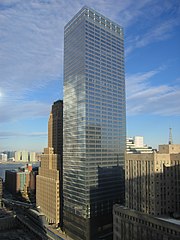
7 World Trade Center, destroyed on 9/11/01. Today it is a shining tower that is 80% leased. Top rents are $80 per square foot, well above the $50 per square foot its critics said it would never get.

Nos. 1-6 World Trade Center, destroyed on 9/11/01. Today it is… a pit.

What is the difference? The former is owned and operated by a private developer, Silverstein Properties. The latter is owned by the Port Authority of New York and New Jersey. Although leased to Silverstein Properties, all major decisions regarding its rebuilding have to be approved by its government owners.

What is the lesson? Draw your own conclusions.


Source: New York Post, "Moody's Takes More", 2/27/07


Tuesday, February 13, 2007

Funding the Enemy

The United States has already paid $1.026 billion in ransom to the North Koreans in order to stop them from building the nuclear bomb. That was the price tag from 1995-2003 of President Clinton's "Agreed Framework" plan. Under that plan, negotiated in 1994, we paid the North Koreans food, fuel oil and in two light-water nuclear reactors to stop building the nuclear bomb. We helped them build nuclear reactors in exchange for stopping the building of the nuclear bomb. That is kind of like helping someone make dynamite in hopes that they don't build bullets.

You can read all about it here in a report prepared by the Congressional Research Service, a bureau of the U.S. Congress.

What did we get in return for the $1.026 billion? The answer occurred on October 9, 2006, when North Korea conducted a test explosion of what may have been a nuclear bomb.

Now, President Bush has agreed to give an additional $400 million of fuel oil and electricity... in exchange for what? The North Koreans have agreed to shut down current bomb-making efforts. What about the prior nuclear bombs they may have already made and the weapons-grade uranium they have stockpiled? We will leave that to a future negotiation to determine how much additional ransom we should give the North Koreans to turn that over to us.

What is to stop the North Koreans from lying and continuing their production of more nuclear bombs, just like they did in 1994 when President Bill Clinton and Secretary of State Madeleine Albright negotiated the first ransom payment? Nothing.

President Bush once called North Korea part of the Axis of Evil. Today he is paying money to a key member of that Axis. They will use it to build more nuclear bombs. We, the citizens of the United States, are paying for construction of the bombs that may one day be exploded over our cities.

***

For a pictorial representation of how the North Koreans have played us, look here.

Friday, February 09, 2007

Mikhail Khodorkovsky: Victim of the New Soviet Union

On Monday of this week, the Russian Prosecutor General levied new criminal charges against Mikhail Khodorkovsky. The new charges mean it is likely that Khodorkovsky will remain imprisoned at a Siberian labor camp past 2008, when he is currently up for parole. Khodorkovsky has been incarcerated since July 2003 after being charged and then convicted of tax evasion, stealing and sundry similar charges.

What is really going on here?

Russian President Vladimir Putin, a former KGB officer, has been ruthlessly stamping out all forms of opposition. He is re-nationalizing companies and closing down independent television stations and newspapers. He now appoints provincial governors who used to be elected. While he has been in office, more than 40 journalists have been assassinated. Under his watch, none of these crimes has been prosecuted. He is confiscating foreign business interests in Russia, using the pretext of violations of meaningless environmental laws. Such a tactic was used to partially confiscate the $20 billion Sakhalin oil project, after Royal Dutch-Shell had invested billions in the project.

When he was an active KGB officer serving in the Leningrad (now St. Petersburg) district, one can only imagine what crimes Putin committed or witnessed. The recent polonium murder of Alexander Litvinenko in London is an example of the type of KGB-sponsored actions that were frequent in the old Soviet Union and have now been resurrected in the new Russia.

Putin is going out of his way to make sure that a man like Mikhail Khodorkovsky spends more time in the gulag. Why is he such a threat?

Men like Khodorkovsky are a threat to dictators everywhere because they are independent. Khodorkovsky was a double threat to the dictator, a man independent in his thinking and independently wealthy. Khodorkovsky was not just the wealthiest man in Russia at the time of his arrest in 2003, but he was the architect of Yukos, the second largest oil company in Russia. Under his leadership, Yukos became the first large Russian company to report accounting figures using internationally accepted “GAAP” (Generally Accepted Accounting Principles) standards. By doing so, Khodorkovsky raised the standard for other corporations to follow in Russia, a standard that would facilitate modern capital markets and greater foreign investment in Russia. Khodorkovsky brought in Western managers to modernize Yukos’ business practices, including U.S. citizen Steven Theede, who was brought in as Chief Financial Officer of the company, and became its Chief Executive Officer after Khodorkovsky’s arrest.

All of the business steps Khodorkovsky took resulted in Yukos’ oil production growing at a nearly 20% annual rate during the last three years before his arrest and the Russian government's confiscation of Yukos. The proof of his Western managerial style was in these results.

Based on the public information available, Khodorkovsky’s actions are those of a highly competent, intelligent and successful business executive. His rise was a remarkable sign that Russia had changed, that the old Soviet Union was giving way to a new Russia that was more free and more Western than it had ever been before.

One of the charges against Khodorkovsky is that he unfairly acquired the assets that formed the base of Yukos during the corrupt privatizations of the 1990s. This may be true, but it is irrelevant. In a Communist society, no one “owns” the industrial plants, equipment and resources. The state was not the owner; it was the confiscator of property that had been formerly owned by private individuals prior to the Revolution. Such property would lie fallow until men like Khodorkovsky stepped forward to make it valuable. This process is similar to the appropriation of land by the Homesteaders in the United States in the 1800s. Vacant land was occupied by settlers who farmed it, and it became theirs. That was the same status of the property that had been abandoned by the Communists when the Soviet Union collapsed in the early 1990s.

That men such as Khodorkovsky stepped forward to appropriate such property, and make it far more valuable than it had ever been under the Communists, we should all be thankful. By doing so, he created wealth that he enjoyed and all those who did business with him enjoyed. That wealth was created, after having been dissipated by the Communists before. By doing so, he also helped bring the rule of law through modern business practices and accounting standards to Russia.

Stated in simplest terms, the proof of Khodorkovsky’s moral right to the property that formed the base of Yukos is the fact that he made it productive. He was a Homesteader.

Moral leaders in the West have said little about Khodorkovsky’s imprisonment (under horrible conditions, he was recently slashed by a fellow inmate). In the United States, leaders such as President Bush, who himself excoriated American businessmen and imposed punishing new rules on them such as Sarbanes-Oxley, have been incapable of taking a moral stand in support of Khodorkovsky. Instead, Bush, speaking of Putin, utters such grotesque inanities as, “I looked the man [Putin] in the eye. I found him to be very straightforward and trustworthy. // I was able to get a sense of his soul; a man deeply committed to his country and the best interests of his country.” With statements like that backing him up, it is no wonder that Putin feels morally empowered to stamp out the independent minds in Russia.

I wish Mikhail Khodorkovsky well. May justice prevail.

Sunday, February 04, 2007

Mass Hysteria

A recent HBO documentary chronicles a road trip through the Bible Belt.
Friends of God: A Roadtrip with Alexandra Pelosi shows the narrator as she visits a truck stop where nightly prayer sessions are held; as she interviews a man who erects gigantic white crosses all over the South; as she chronicles brain-washing sessions for children where overweight hucksters explain the truth of Creationism, and how man could not be evolved from monkeys; as she visits a family of ten children where the pregnant mother describes how she used to want to be a doctor, but now glories in her holy duty of procreating for Christ. The narrator attends church meetings where well-known national ministers such as Jerry Falwell tell his congregation to vote for candidates who uphold Christian values such as anti-abortion. She shows us Christian comedians and Christian rock stars, and Christians who proudly declare themselves "soldiers for Christ" at "Battle Cry" rallies.

She shows us mass hysteria.

How much of a threat is it? Is it growing, or declining? What would these people do if they gained complete political power? What would happen to atheists, agnostics, gays, and members of every religious sect other than fundamentalist Christianity?

The ideas are so ridiculous, the worship is so... cheesy, that I find it hard to take seriously. Hopefully, a majority of Americans will always feel as I do. Hopefully, a majority of Americans will respect science. Hopefully, a majority of Americans will uphold the separation of church and state. Hopefully, a majority of Americans will stand for religious freedom, the right of people of different faiths -- and no faith at all -- to live together peaceably. Hopefully, a majority of Americans do not want government legislating personal morality.

These Christian true-believers are laughably small in stature. They take the Bible literally. They believe the earth is 6,000 years old. They believe God created man in His image and that evolution is false. They are hypocrites and guiltily engage in the sexual practices they say are evil.

As they battle for Christ, they tell us they would outlaw abortion. They would ban certain sex practices and homosexual acts. They would use government money to fund their causes in violation of the First Amendment. All of this they have admitted.

And if they really got all of the political power they crave, what would their true colors be?

Tuesday, January 30, 2007

Nuclear Power: Hated by Environmentalists

The environmentalists' hatred for man and his technology is revealed by the reluctance of most environmentalists to embrace nuclear energy as a solution to the alleged global warming problem. Nuclear plants emit no carbon dioxide. Yet, environmentalists will rant and rave against nuclear power for all of its alleged harms, despite the fact that in the West not a single person has died from an emission of radiation into the environment by a nuclear power plant.

If the Nuclear Regulatory Commission were shut down, and all federal and state regulations were eliminated on nuclear power plants (and all other forms of electricity generation), I suspect that we would generate the majority of our electricity from nuclear power plants. Nuclear power has an inherent economy of scale because a very tiny amount of material can produce a huge amount of energy. Nuclear energy is very concentrated. This means that the cost of handling uranium and disposing of waste is very small in comparison to the amount of energy produced.

Contrast this with coal, where many 100-car-long trainloads of coal are needed to produce the amount of electricity that could be produced in a couple softballs' worth of uranium. Even with nuclear waste being radioactive, it is far easier and more environmentally "friendly" to dispose of nuclear waste than it is to dispose of coal waste, some of which inevitably gets disposed of in our lungs.

Only a wealthy, technologically advanced society can cheaply deploy a technology as advanced and beneficial as nuclear energy. Nuclear energy is clean and would be very cheap if it were not regulated. Yet all of the regulations on power generation -- including the pollution rules on fossil power -- just make our economy that much poorer, and less able to afford something as magnificent as nuclear power. So, ironically, by attempting to regulate in order to prevent pollution, such regulations have the opposite effect of making us poorer and therefore more likely to use polluting technologies, such as fossil fuels.

This point may not seem obvious, but observe that the worst polluting societies are the emerging Third World countries that are far poorer than ours. China, the former Soviet Union, developing parts of Africa and Asia, all have far more polluted air than we have in the West. Poverty and pollution go hand-in-hand.

As a final tidbit on nuclear power, I remember reading about an Alaskan village that wanted to install a tiny underground nuclear reactor for electricity. They believed it would be far cheaper to generate electricity through nuclear fission than it was to burn fuel oil that had to be arduously transported at great expense to their small village. I spoke to a nuclear engineer who told me that it was feasible to make such small nuclear reactors, but you would have to wait for "hell to freeze over" before the regulators would permit it. Given how much those Alaskan villagers have to pay for electricity, and how low they probably set their thermostats to save money, I imagine that they are already living in their frozen little hell.

Monday, January 29, 2007

Señor, Where's My Tortilla?

At the risk of sounding drunk on the ethanol story, here is another unintended consequence of that boondoggle. The excellent Latin American editorial columnist Mary Anastasia O'Grady describes in today’s Wall Street Journal a scenario south of the border whereby Mexicans may soon discover they have run out of tortillas.

This unlikely of scenarios requires a "perfect storm" of government intervention on both sides of the border. It hasn’t happened yet, but warning signs of the coming storm are visible. The first of these, the U.S. ethanol subsidy, is already underway. As a result, global corn prices are rapidly rising. Corn futures are at record levels.

Tortillas, made from corn, are a ubiquitous and tasty staple of Mexican cuisine. Spanish conquest, wars, revolutions, and socialist economic policies could not dislodge the tortilla from its central place in Mexican cooking. However, a perfect storm combination of artificially high corn prices caused by the U.S. ethanol subsidy, Mexican quotas on imported corn, and impending price controls has the potential to do so.

How could this happen? Mexico has long imposed a quota limiting imports of corn. The ostensive purpose of this policy is to ensure a sufficiently high price of corn domestically so that the many thousands of Mexican subsistence farmers could keep operating. Farming small plots of land high in the mountains in a style that has barely changed since the days of the Aztec Empire cannot compete with the economies of scale of modern, industrial farming.

However, Mexican corn farmers are free to export their corn if the global price is high enough. Guess where the big new demand for corn is pushing global corn prices to record levels? The new demand for corn is coming from the U.S. ethanol plants that are converting corn into ethanol.

Now, there can still be enough tortillas on the street corner, albeit at much higher prices, if the price mechanism is not interfered with. Tortilla prices will simply rise to reflect the higher prices of corn.

But in Mexico, tortilla prices are a political issue. So, the government there is considering imposing price controls on tortillas. If that happens, in accordance with the economic law of supply and demand, a shortage of tortillas will develop. Too many people will want tortillas because the price is held artificially low, and not enough tortilla makers will want to make tortillas because they cannot make a profit when corn prices are so high. So, don’t be surprised if next time you are in Mexico, you overhear one hungry Mexican asking another: ¿Señor, dondé está mi tortilla?

***

Note: Edited last paragraph for clarification and style on 1/30/06.

Tuesday, January 23, 2007

Drunk on Ethanol

In economics, there is the principle that capital will flow to its highest use. In other words, if you can make a profit doing something, you will find backers for your idea.

That principle is forgotten in what is shaping up to be a monumental boondoggle. I am referring to the government's massive program to promote the production of ethanol as a substitute for gasoline. The motives for this program are several. The stated one is that it will improve our security by reducing our dependence on Middle Eastern oil. That is unlikely. But the less frequently mentioned reason is that it is a sop to farmers. It is seen as yet another in the long, 75-year history of government programs that subsidize farmers: most ethanol is made from corn.

Already, corn farmers are feeling the money-rush of Bush's 2005 expansion of government support for ethanol production. Prior to 2005, ethanol producers benefited from favorable tax treatment, in particular an exemption from the 51 cents-per-gallon federal tax on gasoline. Despite that relative advantage, ethanol production for fuel had grown modestly. The Bush-sponsored Energy Policy Act of 2005 went much further. That Act made the tax break permanent, imposed a tariff on imported ethanol, and called for the first-ever requirement that gasoline producers incorporate a quantitative target of ethanol into a gasoline-ethanol blend to be used by cars.

The effect of the triple-punch of favored tax status, tariffs and production quotas has been huge. In just the past two years, the number of ethanol plants in operation has doubled to 110. Half of these are owned and financed by farmers. In 2006, 5.4 billion gallons of ethanol were produced as producers labored to meet the quota.

Today, President Bush proposed more than quadrupling the bet on ethanol by raising the mandatory production target for gasoline substitutes, primarily ethanol, to 35 billion gallons from the current 7.5 billion target. That represents more than 20% of current gasoline consumption.

Such a massive increase in ethanol production, because it largely depends on corn, will predictably raise the price of corn. It is already happening. Higher corn prices mean higher prices for everything that is made from corn, including livestock feed and high fructose corn syrup. (High fructose corn syrup is itself a market that was largely created by government intervention, in this case the near-prohibition of sugar imports.) This means higher prices for meat and the large number of food products that are sweetened with high fructose corn syrup such as soft drinks. American corn exports will also suffer as they are slowly priced out of the international market.

All of this will have a sad and predictable end. Eventually, the subsidies will be curtailed and/or the price of oil will fall to such a level that ethanol will become unprofitable even with the subsidies. A majority of the plants that produce ethanol will be shut down. Farmers who invested in the ethanol plants will lose their investments. Farmers who plowed under their soybeans and grain fields to plant more corn will get hammered. And, at the end of the day, we will discover that the entire effort did not make a dent in our imports of oil, which will be greater than ever. (The latter acknowledges that production of ethanol may actually consume more energy than it produces. If that is true, increasing ethanol production may result in greater imports of oil. Even if it is not true, it is unlikely that ethanol production will result in any significant energy savings. See the first link above.)

A lot of investment, both direct investment through venture capital and government subsidies, and indirect investment through the diversion of resources from other uses, will be wiped out.

All of this is easy to predict because the government's sponsorship of an ethanol program violates a basic principle of capitalism. That principle is that capital flows to its highest and best uses, if it is left free. If ethanol were practical, no subsidies would be necessary. Because subsidies are necessary, it is not practical. Once the impracticality of ethanol is revealed in the marketplace and the subsidies end, the entire pseudo-industry crashes down.

Government management of the economy never works. There are no examples of legitimate industries requiring subsidies, and no examples of subsidized industries that are legitimate, to the extent they are subsidized. All subsidies destroy wealth. Today, everyone -- farmers, politicians and international security "experts" -- is drunk on ethanol. Tomorrow, all of them -- and all of us who were forced to pay for this boondoggle through higher taxes and prices for corn -- will wake up with a hell of a hangover.

* * *

UPDATE 1/25/07: The good times at the ethanol punch bowl may end sooner than a lot of soon-to-be-unhappy investors and farmers may realize. The Dow Jones Newswire reports:

"Speaking... at the World Economic Forum, [U.S. Energy Secretary] Bodman also said he does not see a 51-cent-a-gallon subsidy to U.S. farmers remaining in place beyond 2010 or an import tariff of 54 cents a gallon on ethanol beyond 2008. 'The idea is that at some point in the future all these technologies need to stand the test of the free market,' Bodman said."

Perhaps Bodman has been reading up a little on how ethanol may consume more energy than it saves, corrodes automobile engines, raises the price of corn products... Well, you know the story. All subsidies end. But before they do, they cause a lot of damage. That is why Bodman is wrong on one key point. All technologies should stand the test of the free market all of the time, not just at some point in the future.